Why Floor Care Is Your Highest-ROI Maintenance Investment
Replacing commercial carpet costs $3-$7 per square foot. Replacing VCT or LVT flooring runs $4-$10 per square foot. For a 10,000 square foot Austin office, that's $30,000-$100,000 in replacement costs. Professional floor care that extends the life of your flooring by even 2-3 years saves tens of thousands of dollars. But the ROI goes beyond replacement costs. Well-maintained floors reduce slip-and-fall liability (the #1 premises liability claim), improve indoor air quality by removing trapped allergens, and communicate professionalism to every person who walks through your door.
Carpet Care: Beyond Vacuuming
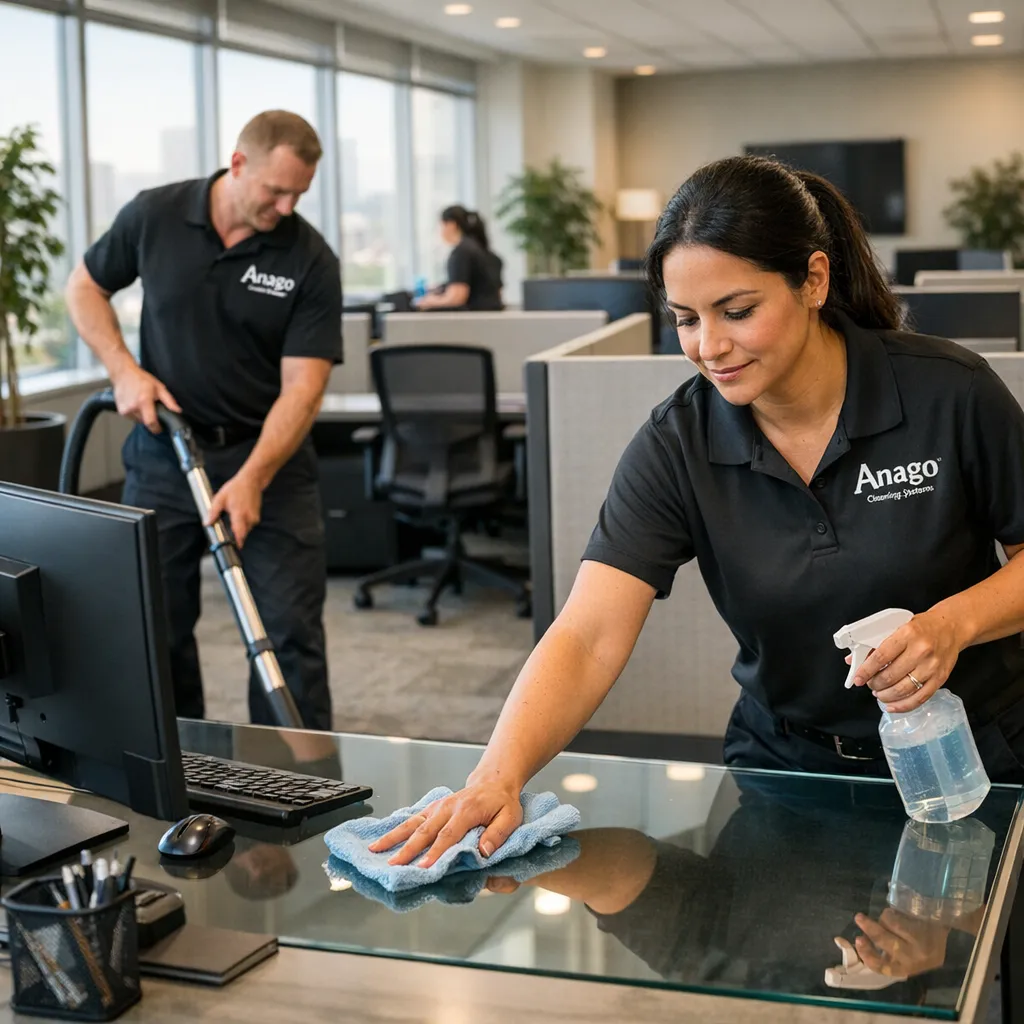
Commercial carpet acts as the largest air filter in your Austin building — trapping dust, allergens, bacteria, and pollutants in its fibers. Regular vacuuming removes surface debris, but the contaminants embedded deep in the carpet require professional extraction. A comprehensive carpet care program includes daily vacuuming of high-traffic areas with commercial HEPA-filtered equipment, spot treatment of stains within 24 hours (the longer a stain sits, the harder it is to remove), quarterly hot water extraction (steam cleaning) to remove deep-embedded contaminants, and annual carpet protector application to resist staining and extend fiber life. The most common mistake Austin facility managers make with carpet care is waiting until the carpet looks dirty before scheduling extraction. By that point, damage to the fibers is already occurring. Preventive extraction on a schedule maintains both appearance and longevity.
Hard Floor Care: VCT, LVT, Concrete, and Stone
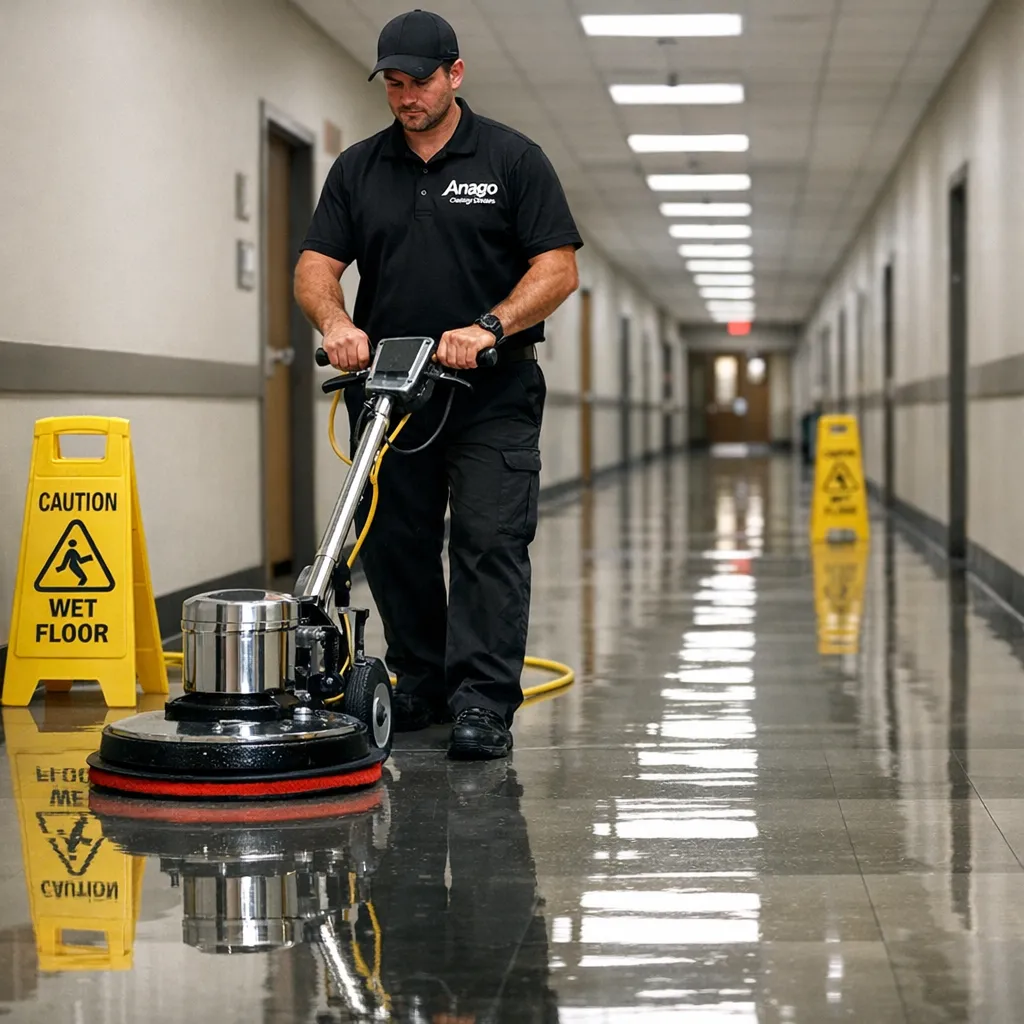
Each hard floor type in your Austin facility requires specific care protocols. VCT (Vinyl Composition Tile) requires regular stripping and waxing — typically 2-4 times per year depending on traffic. The wax layer protects the tile surface from wear and gives the floor its shine. Skipping wax cycles exposes the tile to damage that shortens its lifespan. LVT (Luxury Vinyl Tile) should not be waxed — it requires specialized cleaning agents that maintain the factory finish without building up layers that cause yellowing. Polished concrete requires periodic resealing and diamond polishing to maintain its finish and stain resistance. Natural stone (marble, granite, terrazzo) demands pH-neutral cleaners — acidic products etch the surface permanently. The takeaway: using the wrong products on the wrong floor type causes more damage than not cleaning at all.
Entryway Management: The First Line of Defense
Up to 80% of the dirt in your Austin facility enters through the front door — tracked in on shoes. Effective entryway management is the single most impactful floor care strategy available. Best practices include installing 10-15 feet of commercial-grade walk-off matting at every entrance, using a three-zone system: scraper mat outside, combination scraper/wiper at the threshold, and moisture-absorbing mat inside. Mats should be professionally cleaned weekly and replaced when worn. During rainy or muddy conditions, add supplementary mats and increase cleaning frequency. This isn't glamorous, but the math is clear: every dollar spent on entryway matting saves multiple dollars in floor cleaning and replacement costs.
Building a Floor Care Calendar for Your ${city} Facility
Effective floor care runs on a calendar, not on visual assessment. By the time your floors look like they need attention, the damage cycle is already underway. A recommended floor care calendar for Austin commercial facilities: daily — vacuum all carpet, dust mop all hard floors, spot-clean spills immediately. Weekly — full hard floor mopping, carpet spot treatment, entryway mat cleaning. Monthly — burnish or buff VCT floors, deep scrub high-traffic hard floor areas. Quarterly — hot water carpet extraction, strip and recoat VCT in high-traffic areas. Annually — full VCT strip and refinish, deep carpet cleaning of all areas, hard floor resealing as needed. Anago Cleaning Systems builds customized floor care programs for Austin facilities that match your specific floor types, traffic patterns, and budget — protecting your investment with the right care on the right schedule.