Why Warehouse Cleaning Is a Safety Issue, Not a Cosmetic One
In industrial and warehouse environments, cleaning isn't about appearances — it's about safety and regulatory compliance. OSHA's General Duty Clause requires employers to maintain a workplace free from recognized hazards, and poor housekeeping is one of the most frequently cited violations in warehouse inspections. The risks are concrete: dust accumulation on surfaces and equipment creates respiratory hazards and, in certain industries, combustible dust explosion risks. Spills and floor contamination cause slip-and-fall injuries — the leading cause of workplace injury in warehouse environments. Cluttered aisles and workspaces obstruct emergency exits and create forklift collision hazards. Improperly cleaned loading docks attract pests and create contamination risks for stored goods. For Austin warehouse operators, the cost of inadequate cleaning isn't theoretical — it's measured in worker's compensation claims, OSHA fines, and operational shutdowns.
Floor Care: The Foundation of Warehouse Safety
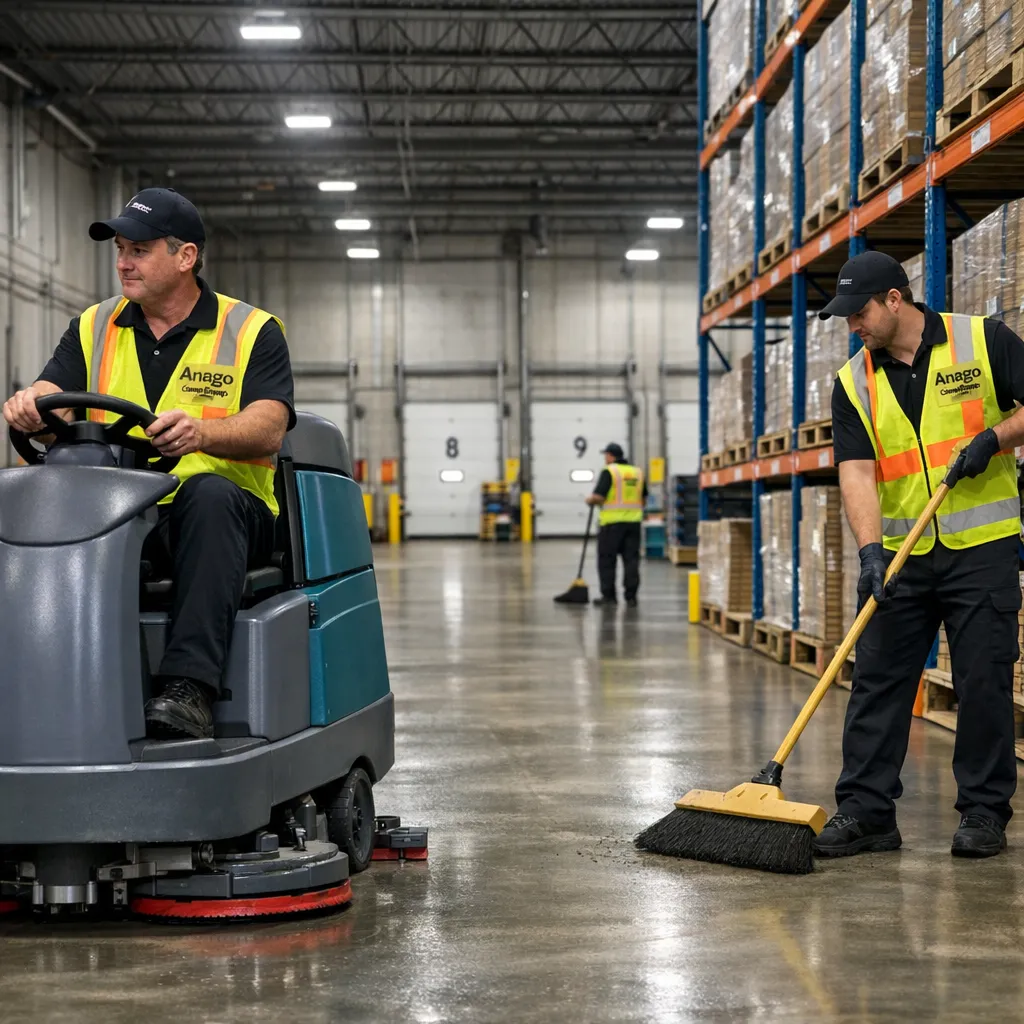
Warehouse floors take more abuse than any other building surface. Forklifts, pallet jacks, foot traffic, and product spills create conditions that require industrial-grade maintenance. Concrete floors develop cracks and pitting that trap dirt, oil, and contaminants — creating both slip hazards and dust generation as the surface degrades. Epoxy-coated floors require specific cleaning products to maintain the coating's slip-resistant properties. Proper warehouse floor maintenance for Austin facilities includes daily sweeping of all traffic lanes and work areas using industrial ride-on or walk-behind sweepers, immediate spill response protocols with appropriate absorbent materials, weekly scrubbing of high-traffic areas with auto-scrubbers, monthly deep scrubbing and treatment of the full floor area, and quarterly floor sealing or coating maintenance. The cost of a slip-and-fall injury in a warehouse — averaging over $40,000 per incident — makes floor maintenance one of the highest-ROI safety investments available.
Dust Control and Air Quality in ${city} Warehouses
Dust is a constant challenge in warehouse environments, generated by product movement, packaging materials, concrete floor degradation, and outdoor air infiltration. Beyond the respiratory health risks to workers, dust accumulation creates additional hazards: it reduces visibility in forklift operating areas, it contaminates products and packaging, and in facilities handling combustible materials (flour, grain, wood dust, metal powders), it creates explosion risks governed by OSHA's Combustible Dust National Emphasis Program. Effective dust control in Austin warehouses requires high-capacity HEPA-filtered vacuuming systems, regular high-dusting of racking systems, beams, and light fixtures, air filtration system maintenance and filter replacement, and dock door management to minimize outdoor dust infiltration. Austin's climate — hot, dry summers with significant dust and pollen — makes this especially important for warehouses in the area.
Restroom and Break Room Standards
OSHA requires employers to provide clean, sanitary restroom facilities — and warehouse restrooms take a beating. High-traffic facilities with workers in boots, gloves, and dusty clothing require more frequent cleaning than a typical office restroom. Break rooms and lunch areas in warehouse environments need to be maintained as clean zones separated from the dusty, industrial conditions of the warehouse floor. This means dedicated cleaning protocols, air quality management, and surface sanitization that prevent workers from eating in contaminated conditions. Neglecting these areas doesn't just create compliance issues — it damages employee morale and contributes to turnover in an industry that already struggles with retention.
Professional Warehouse Cleaning for ${city} Operations
Warehouse cleaning requires specialized equipment and expertise that most general janitorial services don't possess. Industrial auto-scrubbers, ride-on sweepers, high-reach dusting equipment, and knowledge of OSHA housekeeping requirements are baseline necessities — not extras. Anago Cleaning Systems provides warehouse and industrial cleaning programs for Austin facilities that include scheduled floor care programs matched to your traffic patterns and surface types, high-dusting protocols for racking and overhead structures, loading dock and receiving area maintenance, restroom and break room cleaning on frequencies matched to your shift schedule, and documented cleaning logs that support OSHA compliance during inspections. Your warehouse team should focus on operations — not on pushing brooms.