The Unique Cleaning Challenges of Houses of Worship
Churches and places of worship in Austin face cleaning challenges that are distinct from other commercial facilities. High-capacity, intermittent use means hundreds of people fill the sanctuary for 1-2 hours, then the space sits empty until midweek services or events — creating peaks of contamination followed by periods where unaddressed germs multiply. Shared contact surfaces include pews, hymnals, offering plates, communion elements, and greeting handshakes — all creating transmission vectors during services. Multi-use spaces mean the same rooms serve as worship halls, fellowship dining areas, childcare rooms, meeting spaces, and event venues — each use requiring different cleaning standards. Volunteer-dependent maintenance means many Austin churches rely on congregation volunteers for cleaning, resulting in inconsistent quality and deferred deep cleaning.
Sanctuary Care: Protecting Your Largest Space
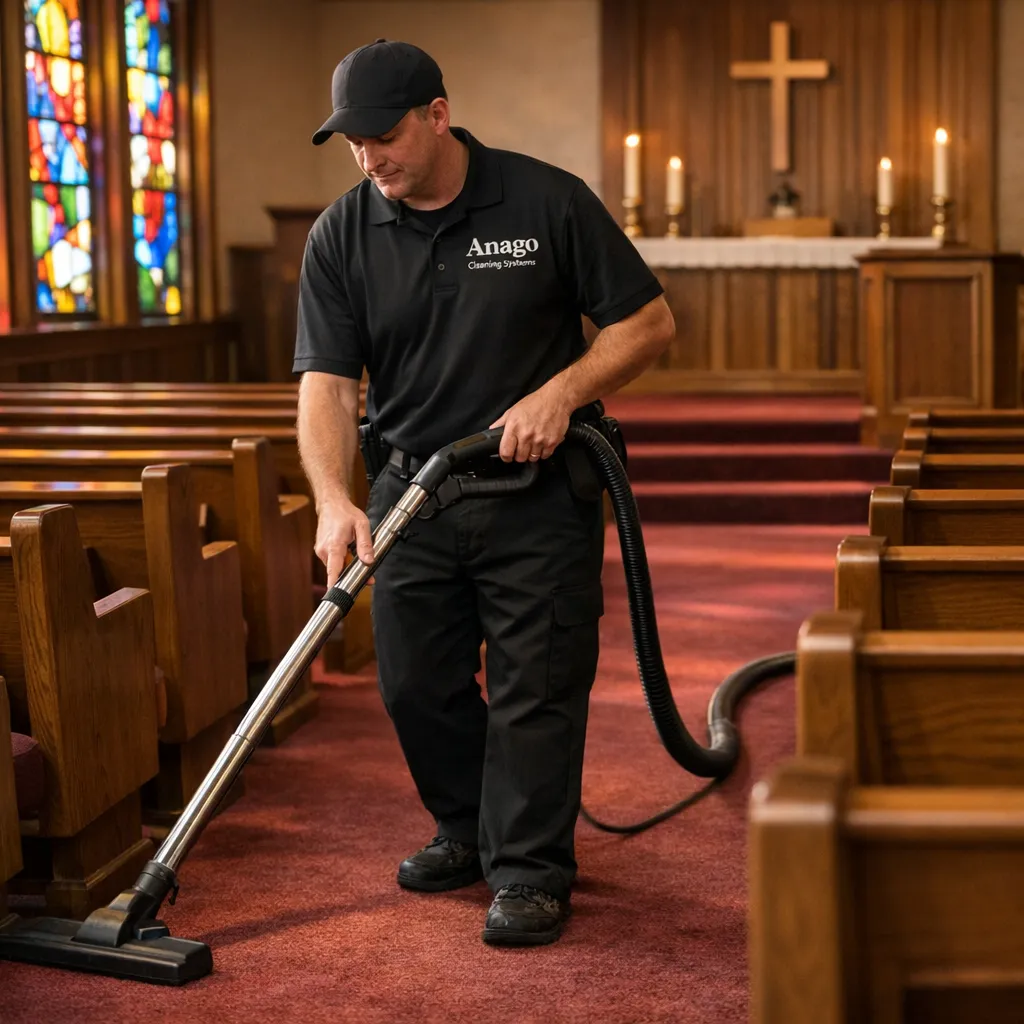
The sanctuary is the heart of your church and the space your congregation experiences most directly. Proper sanctuary maintenance includes pew and seating cleaning — upholstered pews trap allergens, dust, and body oils that accumulate between services. Cushioned pews require regular vacuuming and periodic extraction. Hard pews need disinfection of all contact surfaces. Carpet care in sanctuaries is critical because the carpet endures weekly high-traffic events with specific patterns of wear. Regular extraction extends carpet life and removes embedded allergens. Hard flooring in aisles and altar areas requires specific care — many churches have hardwood, stone, or tile that demands appropriate products and techniques. Hymnals, bibles, and shared materials should be wiped down weekly, with consideration for material sensitivity.
Fellowship Halls and Multi-Use Spaces
Fellowship halls do double and triple duty in most Austin churches — serving as dining halls, meeting rooms, recreational spaces, and event venues. This multi-use nature requires cleaning that resets the room between functions. After meals and potlucks, cleaning must address food service surfaces, floor spills, and trash removal at a level that meets health standards — not just appearance. Folding tables and stacking chairs accumulate grime at joints and contact points that require detailed attention. Kitchen facilities used for congregation meals need the same cleaning standards as commercial food service: surface sanitization, floor degreasing, and equipment cleaning. Event setups and breakdowns leave scuff marks, adhesive residue from decorations, and wear patterns that require periodic floor care.
Childcare and Nursery Rooms: The Highest Standard
Many Austin churches provide nursery and children's ministry rooms during services. These spaces require the same cleaning standards as licensed daycare facilities — because the health risks are identical. Toys must be sanitized weekly at minimum, with daily sanitization during cold and flu season. Floor surfaces where infants and toddlers crawl require sanitization-level cleaning, not just vacuuming or mopping. Diaper changing areas need disinfection-grade cleaning with EPA-registered products. Cribs, mats, and bedding need regular washing and surface disinfection. Parents trust your church with their children's safety. The cleaning standard in these rooms reflects that trust.
A Cleaning Program That Serves Your ${city} Congregation
Most Austin churches benefit from a cleaning schedule structured around their weekly rhythm. Saturday pre-service cleaning prepares the facility for Sunday worship: full sanctuary cleaning, restroom preparation, lobby and entrance maintenance, and childcare room sanitization. Post-service Monday cleaning addresses everything from Sunday: floors, restrooms, kitchen (if fellowship meals occurred), and high-touch surface disinfection. Midweek maintenance supports any scheduled events, meetings, or services. Monthly and quarterly deep cleaning covers carpet extraction, floor care, window cleaning, and the detailed work that keeps your facility in excellent condition year-round. Professional cleaning allows your volunteer energy to go toward ministry rather than maintenance — and delivers consistent results that honor your sacred space.