Why Medical Cleaning Is Different
A doctor's office, dental clinic, or urgent care center isn't an office building. Healthcare facilities deal with bloodborne pathogens, infectious diseases, and vulnerable patient populations. The cleaning standards are set by OSHA, the CDC, and state health departments — and the consequences of non-compliance range from fines to facility closure. Austin healthcare providers need a cleaning partner who understands these regulations, not a general janitorial service trying to figure it out.
Key Standards Your ${city} Medical Facility Must Meet
Healthcare cleaning in TX is governed by multiple regulatory bodies. OSHA's Bloodborne Pathogens Standard (29 CFR 1910.1030) requires specific protocols for handling and cleaning blood and bodily fluid contamination. The CDC's Guidelines for Environmental Infection Control outline disinfection requirements for different risk zones. CMS (Centers for Medicare & Medicaid Services) requires facilities to maintain specific sanitation standards to participate in Medicare/Medicaid. Your cleaning company needs to know these standards cold — not just surface-level awareness, but deep operational knowledge.
High-Touch Surface Disinfection
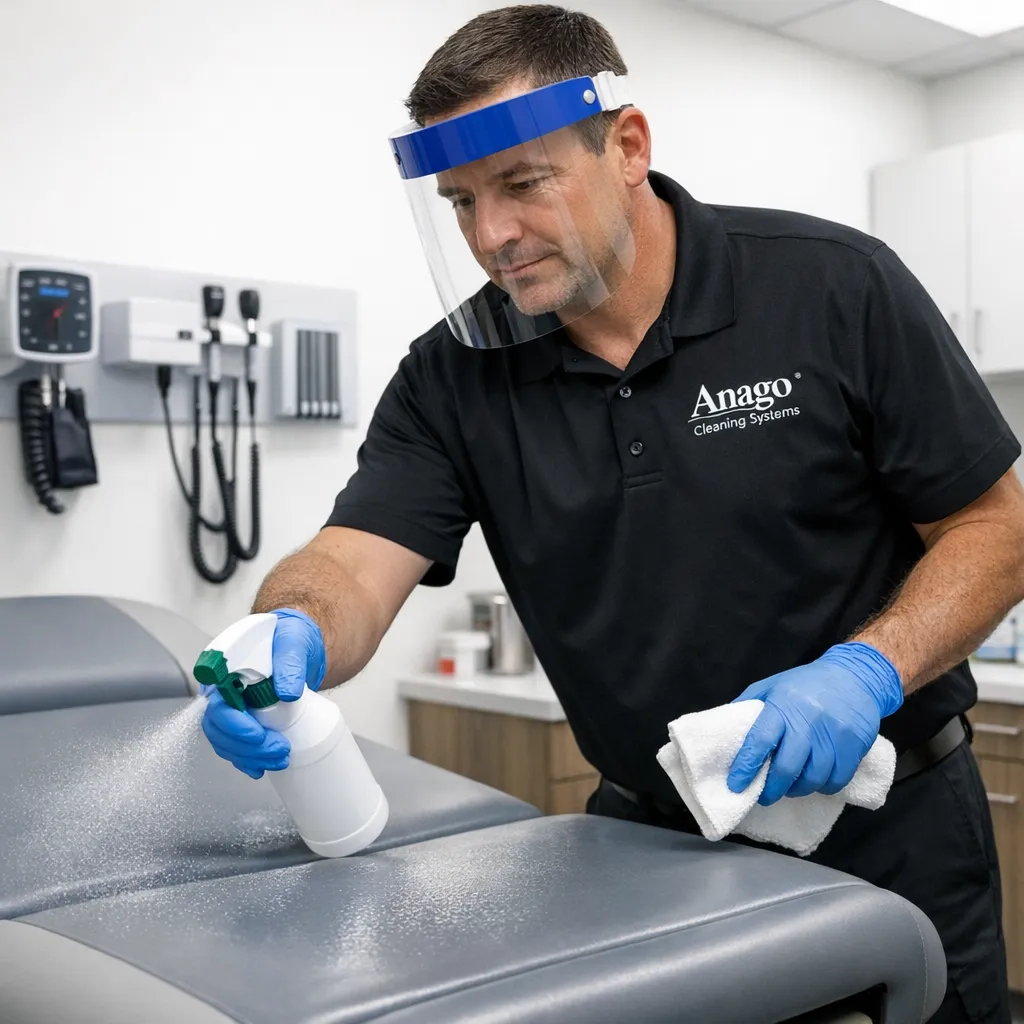
In a medical setting, high-touch surfaces include door handles, light switches, exam tables, countertops, waiting room chairs, check-in kiosks, and restroom fixtures. These surfaces must be cleaned and disinfected with EPA-registered hospital-grade disinfectants at a frequency appropriate to the facility's patient volume. The disinfectant must have the correct contact time — meaning it needs to stay wet on the surface for a specific duration to actually kill pathogens. Quick wipe-and-go approaches don't cut it in healthcare.
Proper Waste Handling
Medical waste requires specialized handling. Regulated medical waste — sharps containers, contaminated materials, and biohazard bags — must be segregated, labeled, and disposed of according to TX Department of Health regulations. Your cleaning team needs to understand the difference between regular trash and regulated medical waste, and they need documented training to prove it. Improper waste handling is one of the most common citations in healthcare facility inspections.
Staff Training and Certification
General janitorial training isn't sufficient for medical facilities. Cleaning staff working in healthcare settings should have training in bloodborne pathogen safety (OSHA BBP), proper use of PPE (personal protective equipment), hospital-grade disinfection protocols, infection prevention procedures, and HIPAA awareness (they're in patient areas, after all). At Anago, our healthcare cleaning franchisees receive specialized medical facility training that covers all of these areas, with ongoing education to stay current with evolving regulations.
Choosing the Right Medical Cleaning Partner in ${city}
When evaluating cleaning companies for your Austin medical facility, ask specifically about their healthcare experience. How many medical facilities do they currently service? Can they provide references from similar facilities? Do they carry the correct insurance for medical environments? What's their protocol for handling a bloodborne pathogen exposure incident? The answers to these questions will quickly separate the qualified providers from the generalists.