Why Post-Construction Cleaning Isn't Regular Cleaning
After any construction or renovation project in Austin, your facility looks finished but isn't ready for occupancy. Construction generates fine particulate dust from drywall, concrete, wood, and other materials that infiltrates every surface, vent, and crevice in the building. This dust isn't just unsightly — drywall dust is a respiratory irritant, concrete dust is alkaline and can damage flooring finishes, and wood dust triggers allergic reactions. Standard janitorial cleaning — vacuuming and surface wiping — doesn't have the equipment or methodology to remove construction-grade contamination. Post-construction cleaning requires specialized equipment, specific techniques, and a systematic approach that works from top to bottom, inside to outside.
The Three Phases of Post-Construction Cleaning
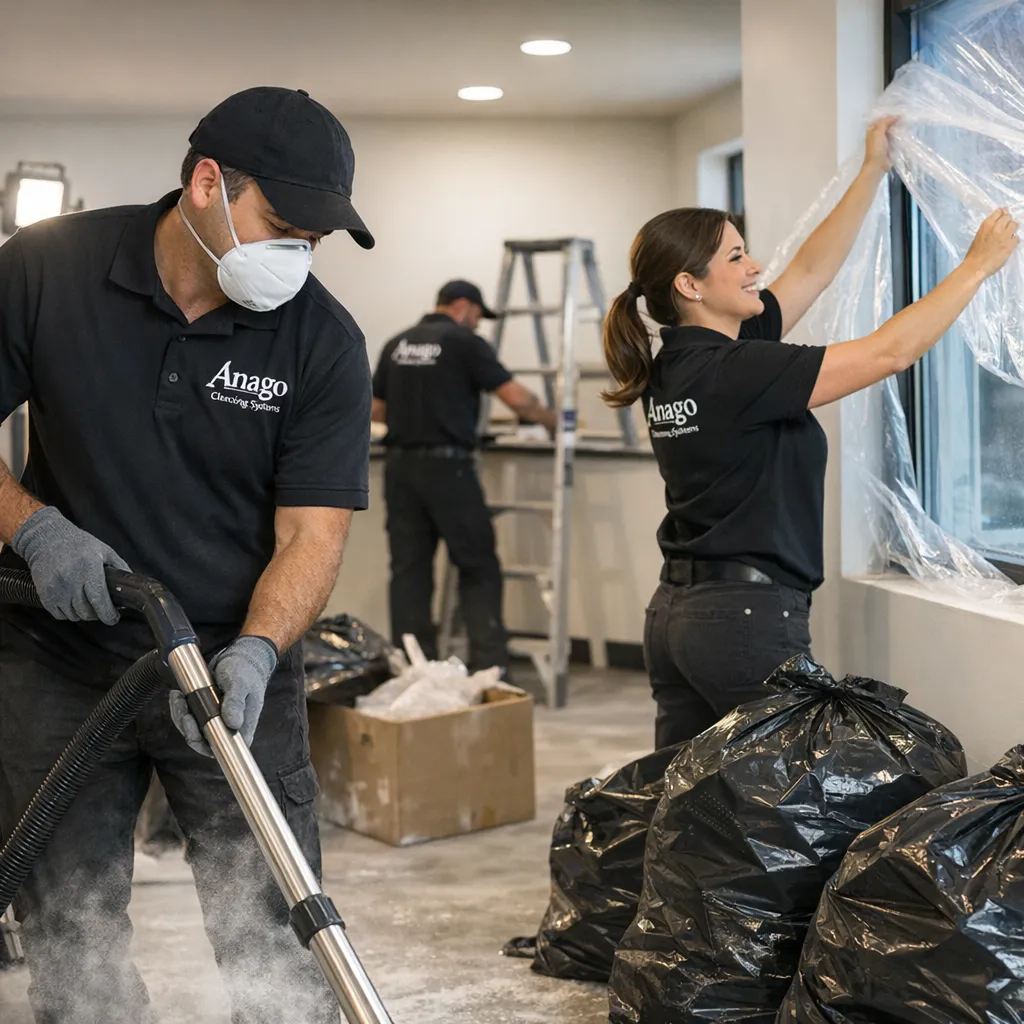
Professional post-construction cleaning in Austin follows a three-phase process. Phase one is rough cleaning: removing all large debris, leftover materials, and visible construction waste. This includes sweeping and shoveling, removing protective coverings from floors and fixtures, and initial heavy-duty vacuuming of all surfaces. Phase two is detailed cleaning: systematically working through every surface from ceiling to floor — wiping all horizontal and vertical surfaces, cleaning all fixtures and hardware, removing adhesive residues and paint overspray, and detailed cleaning of all window frames, sills, and glass. Phase three is final touch-up cleaning: the move-in-ready pass that addresses anything missed in the first two phases, polishes all glass and mirrors, and ensures every surface is ready for furniture placement and occupancy.
The HVAC Problem Most ${city} Projects Miss
The most overlooked post-construction cleaning task is the HVAC system. During construction, fine dust enters ductwork, coats coils, and clogs filters — even when contractors attempt to seal vents. If the HVAC system isn't addressed before occupancy, it will recirculate construction dust throughout the facility for weeks or months, degrading air quality, triggering respiratory complaints, and forcing premature filter replacements. Post-construction HVAC cleaning should include replacing all air filters (construction-phase filters are compromised), cleaning supply and return vent covers, inspecting and cleaning accessible ductwork, and running the system at full capacity during final cleaning to flush airborne particles while HEPA air scrubbers capture them.
Timeline and Planning for ${city} Projects
Post-construction cleaning is frequently underestimated in project timelines, leading to last-minute scrambles and subpar results. For Austin projects, plan for these timelines: small office renovation (under 5,000 sq ft) — 1-2 days for full three-phase cleaning. Medium commercial project (5,000-20,000 sq ft) — 3-5 days. Large commercial or institutional project (20,000+ sq ft) — 1-2 weeks depending on complexity. The best practice is to engage your post-construction cleaning contractor before construction begins, not after it's complete. This allows the cleaning team to coordinate with the general contractor on protective measures, schedule the cleaning phases to align with the construction timeline, and begin phase one cleaning while finish work continues in other areas.
Getting Move-In Ready Right the First Time
For Austin property managers, business owners, and general contractors, the quality of post-construction cleaning directly impacts tenant satisfaction, move-in timelines, and your professional reputation. Cutting corners on post-construction cleaning creates ongoing complaints, premature wear on new finishes, and air quality issues that follow the project long after the contractors leave. Anago Cleaning Systems provides professional post-construction cleaning for Austin commercial projects of all sizes. Our teams have the equipment, training, and systematic approach to deliver move-in-ready results on schedule — so your project ends with the quality it deserves.