The Limitation of Manual Disinfection
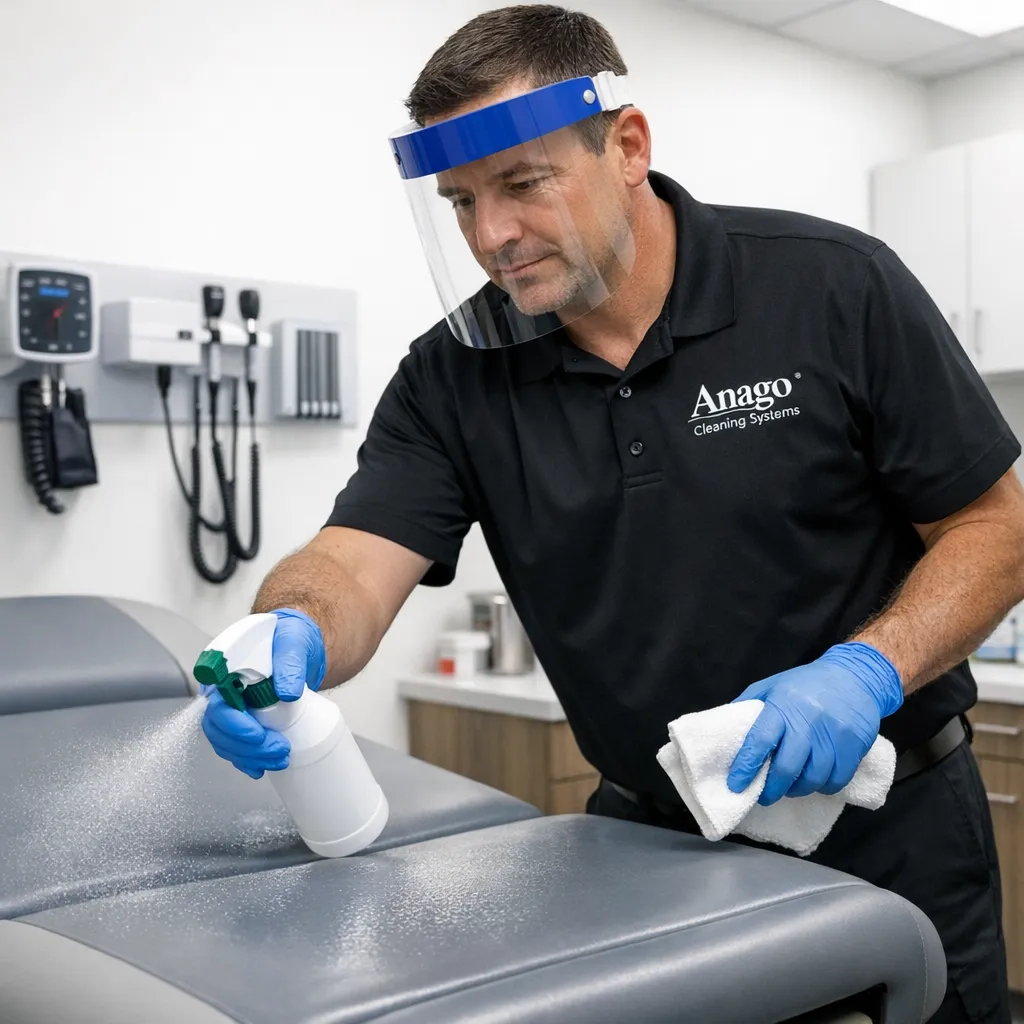
When your cleaning crew wipes down a desk, a door handle, or a conference table, they're covering the surfaces they can see and reach. Studies show that manual wiping typically contacts only 50-70% of the total surface area — missing undersides, edges, complex shapes, and recessed areas. For routine surface cleaning, that's acceptable. For disinfection — where the goal is eliminating pathogens that cause illness — missing 30-50% of surfaces means the chain of infection remains intact. This is the fundamental limitation of spray-and-wipe disinfection: it relies on the applicator reaching every contaminated surface. Electrostatic technology changes the physics entirely.
How Electrostatic Spraying Works
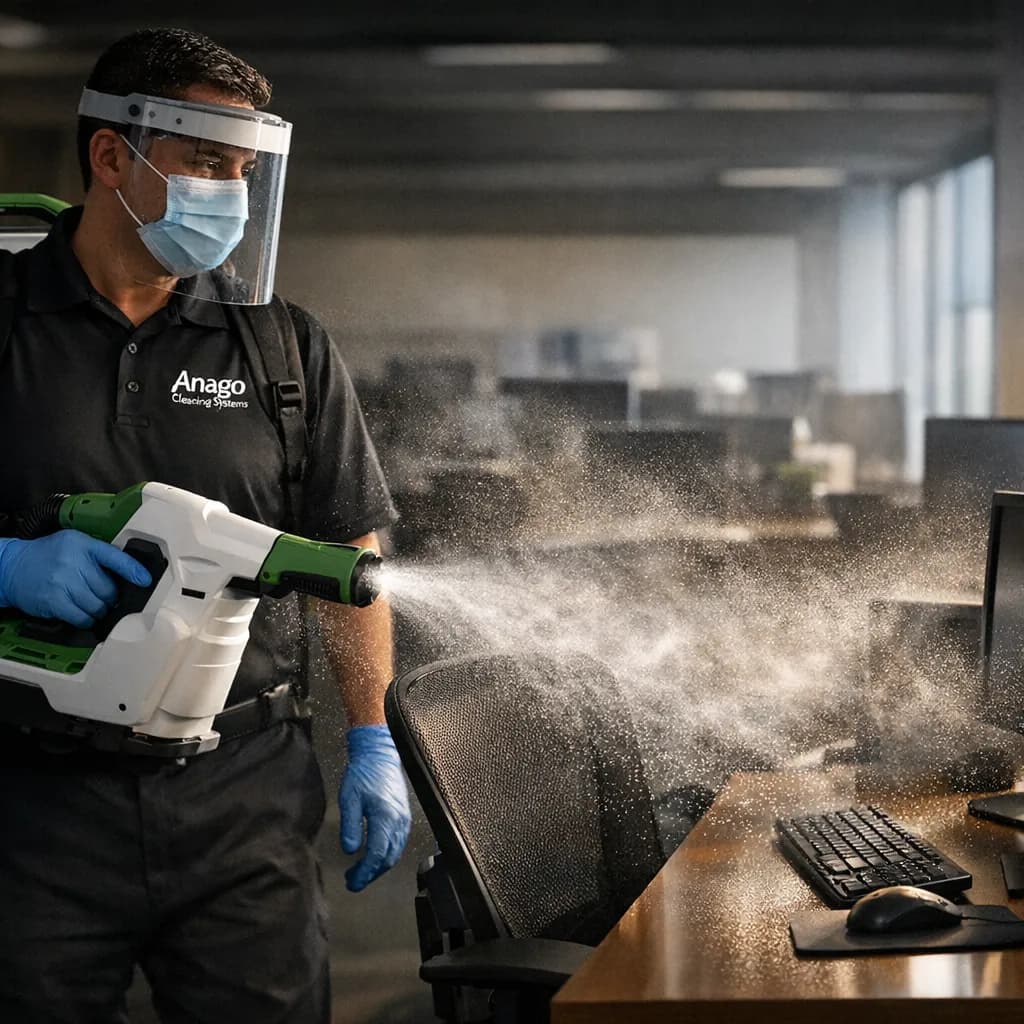
Electrostatic sprayers apply a positive electrical charge to disinfectant droplets as they leave the nozzle. Since surfaces in your facility carry a natural negative or neutral charge, the positively charged droplets are actively attracted to surfaces — including undersides, backsides, and complex shapes that manual wiping can't reach. The result is 360-degree wraparound coverage. The charged droplets seek out uncharged surfaces, creating an even, complete coat of disinfectant across every exposed surface in the treatment area. The technology isn't new — it's been used in agriculture and automotive painting for decades. Its application to facility disinfection accelerated during the pandemic and has since become a standard protocol for Austin facilities that take infection prevention seriously.
Where Electrostatic Disinfection Makes the Biggest Impact
Electrostatic treatment isn't meant to replace daily surface cleaning — it's an escalated protocol for situations where comprehensive disinfection matters most. Austin facilities that benefit most include medical offices and dental clinics where patient safety requires complete surface disinfection between procedures, schools and daycare centers where high-touch surfaces are contacted by hundreds of children daily, fitness centers where perspiration-laden equipment requires full-surface treatment, offices during flu season when absenteeism spikes and manual disinfection can't keep pace, and any facility after a confirmed illness event where rapid, comprehensive disinfection is needed. The technology is especially effective in rooms with complex geometry — classrooms with individual desks, gyms with equipment, and medical rooms with instruments and fixtures that have irregular shapes.
What to Ask Before Hiring an Electrostatic Service
Not all electrostatic disinfection services in Austin are equal. Before hiring a provider, ask these questions: What disinfectant are they using, and is it EPA-registered for the pathogens you're concerned about? What is the required contact time (dwell time), and does their application method ensure surfaces stay wet long enough? Is their equipment properly calibrated for the correct droplet size and charge? Do they provide documentation of treatment — areas covered, products used, and dates? Are their operators trained in proper PPE usage and safe application procedures? The answers separate professional services from companies that bought a sprayer and started marketing.
Integrating Electrostatic Treatment Into Your Cleaning Program
For Austin businesses, the most effective approach is integrating electrostatic disinfection into a comprehensive cleaning program rather than relying on it as a standalone service. The recommended protocol layers daily surface cleaning and disinfection of high-touch areas by manual methods, weekly electrostatic treatment of full office or facility areas during peak illness season, monthly electrostatic treatment during non-peak months, and on-demand treatment following a confirmed illness case or outbreak. Anago Cleaning Systems offers electrostatic disinfection as part of our integrated cleaning programs for Austin facilities. It's one tool in a complete system — not a silver bullet, but a powerful one when used correctly.